
Informational
Panel discussion at ASFA Conference

Data published
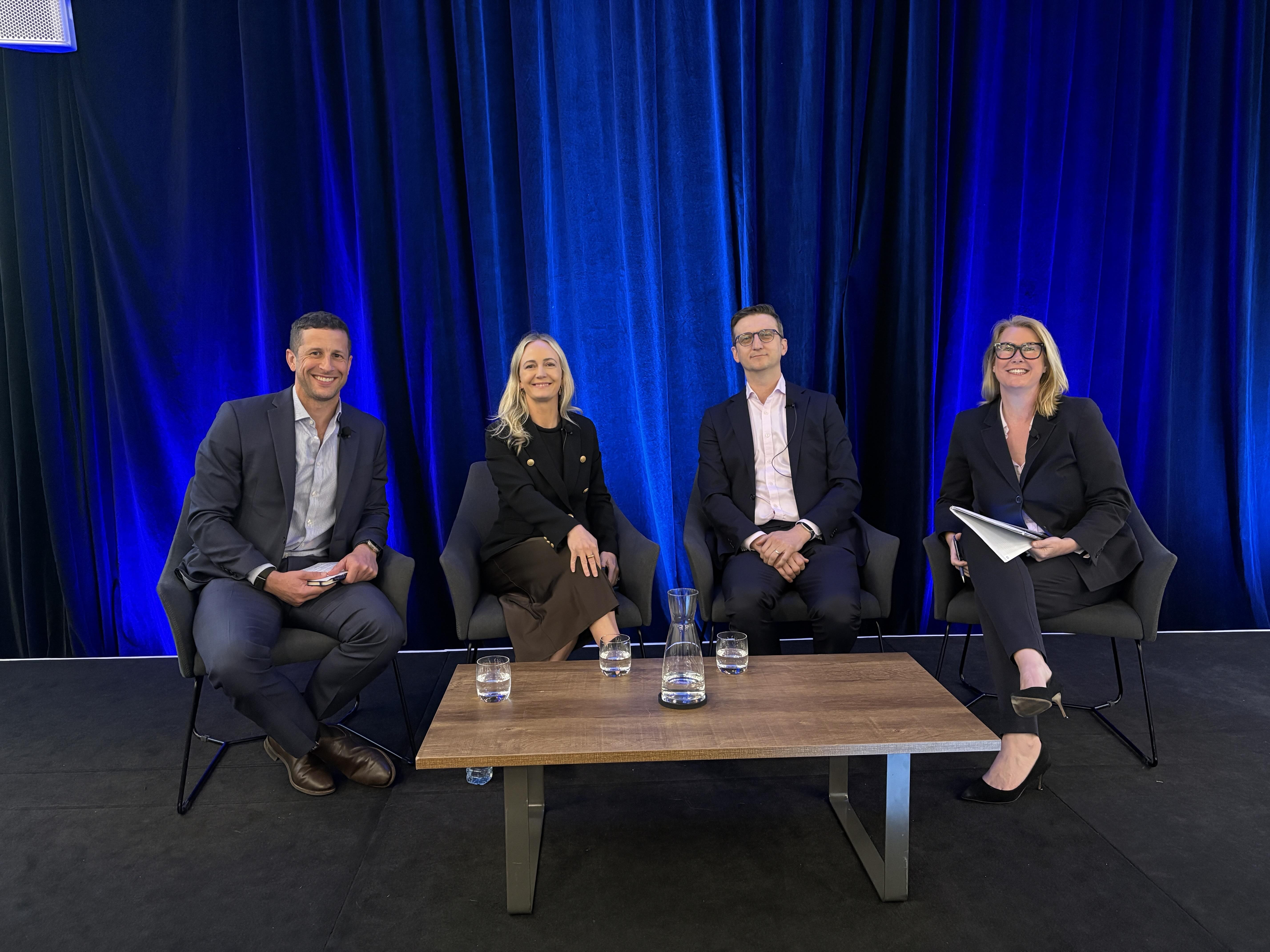
Our CEO David Sandell recently joined Simonne Burnett (Australian Retirement Trust), Brendan Donoghue (UniSuper) and Michelle Bower (Gateway Network Governance Body) for the panel “Friction by design: secure digital journeys without excluding members.” It was a lively discussion ranging from how organisations add the right kind of friction to protect customers to the cyber threats to the super industry and how to mitigate them.
CI-ISAC is the official provider of intelligence sharing for SuperFCX, the super sector’s initiative to protect super fund members from cyber threats, scams and fraud. David’s core message was that the threats facing the financial sector are not unique to finance. They are cross-sectoral, and defending against them requires intelligence sharing and early insight from other industries.
Here are three of the insights he shared.
The vulnerabilities and campaigns affecting a bank affect hospitals, ports, and government agencies. Attackers don’t organise themselves by industry, so we can’t afford to either.
Supply-chain compromise is the clearest example. When a single supplier is breached, the compromise flows on to every one of its customers, across every sector it serves. Nobody can see the whole pattern from inside a single organisation. The same is true of initial access. Phishing, legacy and outdated systems in the supply chain, AI agents, B2B relationships and exploited vulnerabilities all hit critical infrastructure operators regardless of industry.
Attackers take the path of least resistance to achieve their objectives. AI hasn’t changed that; it has accelerated things. AI lets attackers identify and exploit exposures at scale, far more quickly than before.But the root cause almost always comes back to a weak or non-existent control. In most cases, a human attacker could have exploited the same gap. AI is accelerating attacks on old weaknesses, not inventing new ones.
The best defence against AI-enabled attackers is still the fundamentals, done consistently and quickly.
Fabricated and inflated breach claims rose this quarter, and we expect that number to keep rising every quarter from here forward.
That fundamentally changes the equation in cybersecurity. Threat and vulnerability verification is now a core defensive task. Organisations can’t just react to a breach claim; they first need to confirm whether it is real and the true scope. Responding to a false claim as if it were genuine wastes resources, and can cause the very disruption and reputational damage an attacker was hoping for. There is a role for human analysis and triage here to ensure the integrity of the intelligence we receive.
We thank the Association of Superannuation Funds of Australia (ASFA) for the opportunity to present and look forward to working with its members to build cyber resilience.